
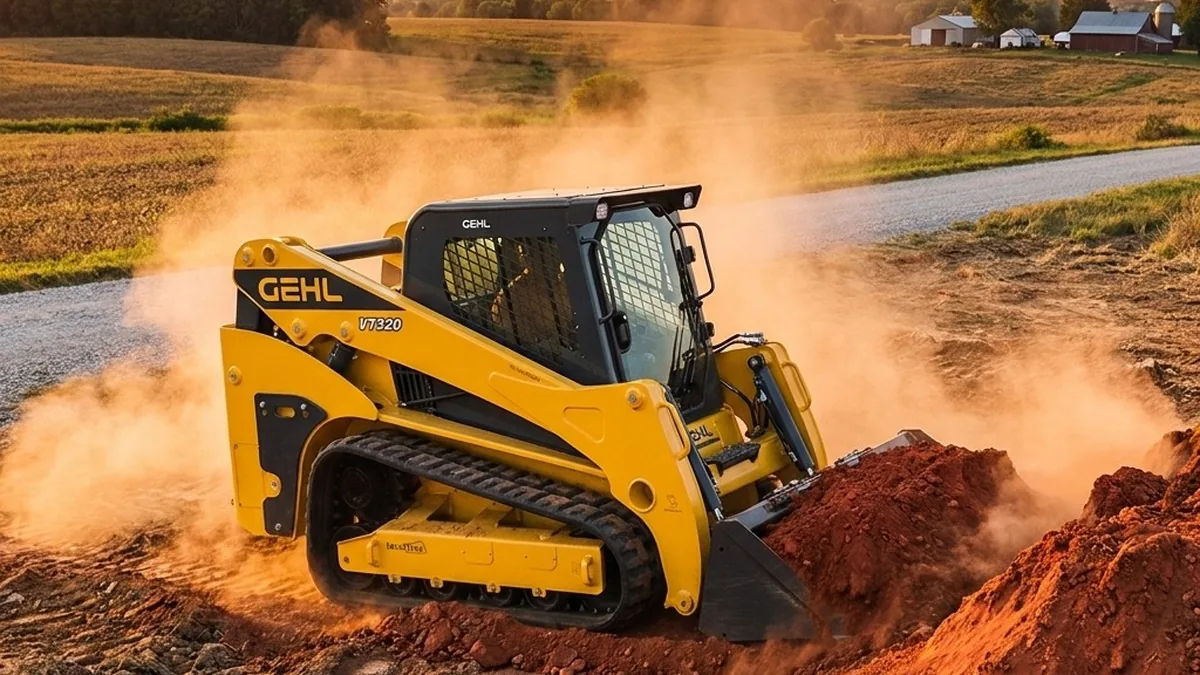
If you're skid steer grading a driveway or building pad on mid-Missouri clay, the machine matters less than how you handle the dirt. Clay around here is its own animal. It's slick and gummy when it's wet, then it bakes into something close to brick when it dries. Get the moisture and the attachment right and you'll hit a clean final grade. Get them wrong and you'll chase ruts and humps for a week. This guide walks through how to think about it as a residential builder or an acreage owner, so you pick the right loader and the right tool the first time.
Why mid-Missouri clay is so finicky
Most of the dirt between Columbia, Mexico, Fulton, and Jefferson City is heavy clay or clay loam. That soil holds water and it holds shape, which is great for a pad once it's compacted and terrible while you're trying to move it.
Here's the short version of what you're fighting:
- Wet clay sticks to everything. It balls up on tracks, packs into a bucket, and smears instead of cutting. You think you're spreading material and you're really just pushing a greasy wad around.
- Baked clay fights the cutting edge. Once it dries out and hardens, the same dirt that smeared an hour ago now skips and chatters under the blade. You end up scraping high spots instead of slicing them.
- The moisture window is narrow. Clay grades best when it's damp but not wet. Think the consistency where a handful holds together but doesn't leave mud on your glove. That window can be a single morning after a rain, or it can be gone by lunch.
The practical takeaway: plan your grading day around the weather, not the calendar. A lot of the frustration people blame on the machine is really a moisture problem.
Box blade vs grading bucket vs laser grading
Three tools cover almost every pad and driveway job. They're not interchangeable, and knowing which one fits the cut you're making is half the battle.
The box blade
A box blade is your workhorse for cutting and leveling longer runs, like a driveway or a road into the back of a property. The box holds material and meters it out as you go, which knocks down high spots and fills low spots in one pass. On clay, the box blade shines because it carries a load of dirt that helps smooth as it drags. Scarifier teeth on the front let you rip the hardpan first when the ground's baked, then box it smooth. If you're building a driveway, this is usually the tool you start with.
The grading bucket
A grading bucket, sometimes called a grader or a low-profile bucket, gives you a wide, flat cutting edge with great visibility over the front. It's the tool for finesse work on a building pad where you want a flat, even surface and you need to see exactly what the edge is doing. It's also handy for spreading rock and feathering material out thin. The wide edge bridges small dips so you're cutting to an average plane instead of following every bump. For final-grade smoothing on a pad, a lot of operators reach for this.
Laser grading
Laser grading is the precision option. A laser-guided grading attachment reads a rotating laser and automatically holds the blade to a set elevation, so you're not eyeballing slope or guessing at fall. For a building pad that has to be dead flat, or a driveway that needs a consistent crown and drainage fall, laser grading takes the human error out of it. It's overkill for a quick rock driveway, but if you're a builder putting in pads where the foundation has to sit right, the consistency pays for itself fast. It's worth knowing the option exists before you spend three days fighting a slope by feel.
Quick way to choose:
- Long driveway, rough to smooth: box blade, with scarifiers if it's hard.
- Flat building pad, final surface: grading bucket for the smoothing, laser if flatness is critical.
- Spreading and feathering rock: grading bucket.
- Tight tolerance, drainage matters: laser grading.
You can see the full range of cutting and grading tools on our attachments page, and it's worth matching the attachment to the job before you settle on a machine.
Skid steer grading on clay: track vs wheel for the finish
This is the question we get most from folks doing dirt work on Missouri clay, and the honest answer is it depends on the ground and the time of year.
A compact track loader spreads its weight across rubber tracks, so it floats better on soft, wet clay and leaves less of a rut. When the ground's damp and a wheeled machine would dig in and spin, tracks keep you working and keep your surface cleaner. For finish grading on a pad, that lower ground pressure also means you're not pressing fresh tire scars into the surface you just smoothed. If you're working ground that holds moisture or you're on the job in spring, tracks are usually the easier path to a clean finish.
A wheeled skid loader has its own strengths. It's faster moving around a site, it's easier on hard or established surfaces, and it tends to cost less to keep rolling because there's no undercarriage to wear. On dry, firm clay, a skid loader grades a driveway just fine, and the speed adds up over a long day. The tradeoff is traction and surface marking when the ground turns soft. Wheels want firmer footing to do their best work.
The short version:
- Wet, soft, or spring clay: tracks float and finish cleaner.
- Dry, firm ground or lots of moving around: a wheeled skid loader is quick and economical.
- Year-round dirt work as your main job: tracks give you more working days on this soil.
If you want to dig deeper into that decision, we wrote a full breakdown comparing the two over at skid loader vs track loader. It covers the cost and wear side that drives a lot of buyers' choices.
Getting to final grade: a clay-smart sequence
Final grade isn't one pass. On clay it's a process, and the order matters. Here's a sequence that holds up on mid-Missouri ground.
- Start with moisture on your side. Grade when the clay's damp, not soupy and not baked. If it's bone dry, a light wetting the day before makes the cut behave. If it's a mud pit, wait.
- Rip the hardpan if it's set up. Scarifier teeth or a ripper break the crust so the blade can cut instead of skip. Skip this on baked clay and you'll just polish the high spots.
- Rough cut to shape. Move the big material, establish your slope and drainage fall, and get close to grade. This is box blade or bucket work depending on the run.
- Let it set, then smooth. Knock down what's left in light passes. Light, overlapping passes beat one heavy drag every time on clay. You're chasing an even plane, not muscling dirt.
- Compact in lifts. Clay needs to be packed in layers to hold a pad or a driveway. Loose clay looks great and then pumps and ruts the first time a truck drives on it. Build it up and compact as you go.
- Set your crown and fall. Water has to leave the surface. A driveway wants a slight crown so it sheds to the sides. A pad wants fall away from where the building sits. On clay especially, standing water is the enemy because it softens everything underneath.
That last point is the one people skip and regret. Clay drains slowly. If you don't build drainage into the grade, you'll have a soft spot or a rut by next spring no matter how flat it looked on day one.
What it costs you to ignore the grade
This is buyer education, not a scare pitch, but it's worth being honest about what bad grading does on clay.
- A pad that wasn't compacted in lifts settles unevenly. That shows up as cracks and low spots after the structure's already on it, which is a far more expensive fix than getting the dirt right the first time.
- A driveway with no crown holds water. Water plus clay plus truck traffic equals ruts, potholes, and a surface you're regrading every year.
- Skipping drainage fall traps moisture under the surface. Saturated clay loses strength, and then everything sitting on it moves.
None of that is exotic. It's just clay being clay. The reason we push the moisture window and the compaction lifts so hard is that they're the cheap insurance against the expensive problems.
Matching the machine to your jobs, not just this one
If you're buying a loader to grade one driveway, you're probably overthinking it. Most people buying a skid loader or track loader around here are buying for years of jobs, so the right call is to think past the pad in front of you.
A few questions worth answering before you pick a machine:
- What ground will you work most? If it's wet, low, or you're on it year-round, lean track. If it's firm and you value speed and lower upkeep, a wheeled skid loader earns its keep.
- What else will it do? Grading is one job. If you're also moving material, loading trucks, mulching brush, or running a grapple, the machine and the attachment list grow with you.
- How much lift and reach do you need? If your work involves setting material up high or reaching out over a load, a different class of machine like a telehandler might fit better than a loader. There's a whole equipment lineup to weigh against the work, not just the grading.
If you'd rather not sort through it cold, our Find Your Machine tool walks you through a few questions and points you at the class that fits the work you actually do. It's the fastest way to narrow a wide lineup down to the machines worth a real look.
Why buy local for dirt work in mid-Missouri
We're in Laddonia, and we sell Manitou and Gehl construction equipment to builders and landowners across mid-Missouri. That covers Columbia, Jefferson City, Mexico, Fulton, and the stretch up through Vandalia and Bowling Green that's been a dealer dead zone for years. For dirt equipment, we're the only Manitou and Gehl dealer for about fifty miles in a lot of directions.
What that means for you is simple. You can talk to people who actually know this clay and this kind of work, instead of driving hours or buying sight unseen. We can help you match the loader and the grading attachment to the ground you're working, and we can lay out financing if that's part of the picture. Right now there's 0% for 48 months on skid and track loaders, rates from 1.99% across the line (1.49% on electric machines), through September 30, 2026. You can dig into the details on our financing page.
Where to start
Grading clay well comes down to three things: work the moisture window, pick the attachment that fits the cut, and match track or wheel to your ground. Get those right and a pad or driveway comes together a lot faster than people expect.
If you're sizing up a machine for grading and the rest of your dirt work, start by browsing the skid loaders and track loaders, then run our Find Your Machine tool to see what fits the jobs you've got lined up. No pressure and no quote push. Just take a look, and reach out when you want to talk it through with someone who knows mid-Missouri clay.