
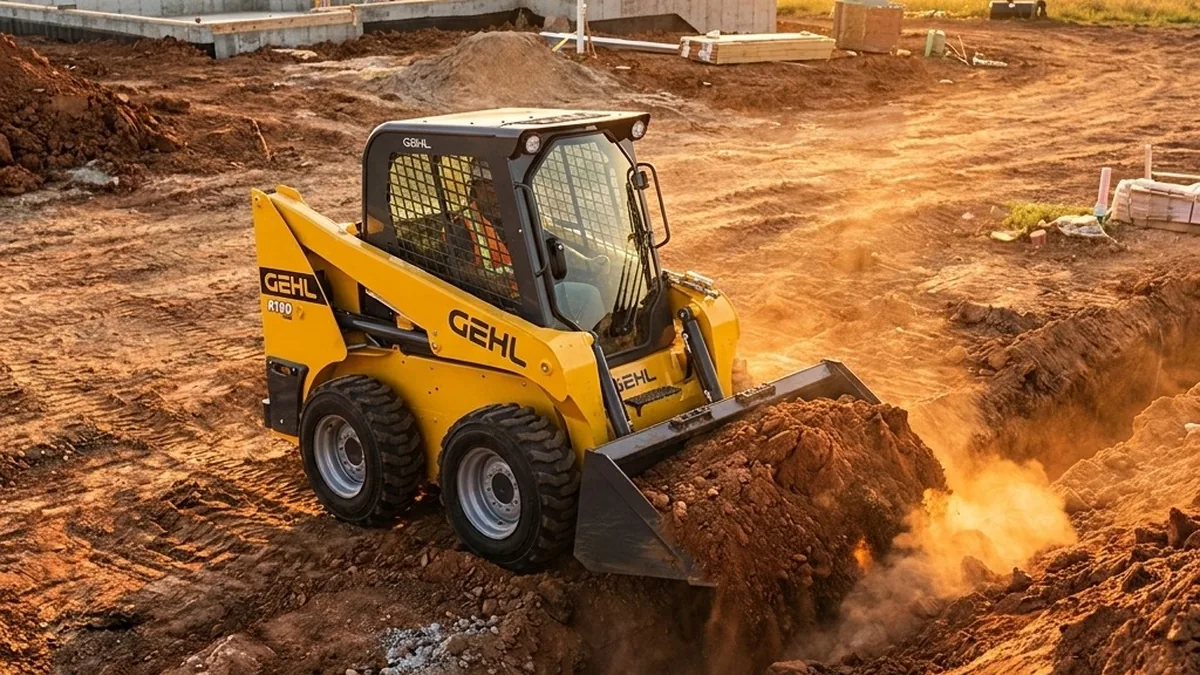
If you're thinking about buying a skid loader, telehandler, or forklift before the year ends, the clock matters more than you think. This Section 179 deduction checklist is built for the mid-Missouri buyer who wants the machine working on the job and the paperwork lined up before December 31. We're a Manitou and Gehl dealer in Laddonia, not a tax firm, so treat this as a get-ready guide and not tax advice. The point is simple. Know what you need, know the deadline, and don't let a slow quote or a financing detail cost you a write-off you were counting on.
This is the do-this-before-year-end version. It walks the buying side of a Section 179 deduction, not the tax math. Your CPA owns the tax math. Our job is making sure the machine and the paperwork are ready in time so nothing on their end gets blocked by something on ours.
Why December 31 is the date that runs the whole thing
Section 179 hinges on one thing most buyers underestimate: the machine has to be "placed in service" by the end of the tax year, not just ordered or paid for. Placed in service means it's ready and available for use in your business. A loader sitting on a truck somewhere in transit on December 31 is a problem. A loader on your lot, fueled up, and ready to run is the goal.
That distinction is the whole ballgame for a year-end buyer. You can sign and finance in late December and still be fine, but only if the equipment is actually in your hands and usable. So the real deadline isn't "buy by December 31." It's "have it ready to work by December 31." Everything else on this list exists to make that happen.
Around here, that also means thinking about delivery and weather. Mid-Missouri Decembers don't always cooperate. If you're in the Mexico, Vandalia, or Bowling Green area, you already know a freezing rain stretch can stall a delivery. Build a buffer in. The buyers who get burned are the ones who start in the last week of the month.
The Section 179 deduction checklist: what to have ready
Here's the short version you can screenshot. Below it, we break each piece down.
- Business entity info. Legal business name, EIN, and entity type (LLC, S-corp, sole prop, etc.).
- How the equipment gets used. A clear read on business-use percentage. Section 179 wants the machine used more than half the time for business.
- A real quote with specs locked. Model, attachments, and configuration in writing, not a ballpark.
- Your buy method. Cash, financing, or a mix, and the paperwork that goes with whichever you pick.
- Delivery or pickup date. Confirmed, with the placed-in-service date in mind.
- Your CPA's input. A quick conversation about your taxable income for the year and how much deduction actually helps you.
- Prior purchases this year. Other equipment you already bought counts toward your annual totals, so your CPA needs the full picture.
That's the spine of the whole thing. Most buyers have half of it already. The half they don't have is usually the quote and the delivery date, which are the two pieces a dealer controls. That's where we come in.
Get a quote with specs in writing, not a ballpark
You can't plan a year-end deduction around a number someone gave you over the phone. Your CPA needs a real figure tied to a real machine, and your financing partner needs the same thing. So the first move is a written quote with the configuration locked.
That means more than just the base machine. It means the attachments and options that change the price and the way the machine earns its keep. A skid loader is a different purchase with a grapple and a set of forks than it is bare. A telehandler's reach and a forklift's mast setup matter for what you're actually buying. Get all of it on the quote.
If you're still deciding between machine classes, that's normal, and it's better to sort it now than in late December. Our guided machine selector walks you through the job and points you at the right class. If you want to read up first, the category hubs lay it out by type: skid loaders, telehandlers, and forklifts each have their own page. Still torn between a wheeled forklift and a telehandler for yard work? Our telehandler vs forklift breakdown is a good fifteen-minute read.
The reason to lock specs early is link-up timing. Once the quote is firm, your CPA can run the numbers and your financing can move. If you wait until the configuration is settled in the last week of December, you've stacked three steps into a window that's too tight.
Financing vs cash: it changes your paperwork, not your deduction
This trips people up, so here it is plain. Whether you pay cash or finance doesn't change your Section 179 eligibility. A financed machine can still qualify for the full deduction in the year it's placed in service, even if you've only made one payment. You get to deduct based on the purchase, not based on how much you've paid down.
That's a big deal for cash flow. You can put the machine to work, take the deduction this year, and spread the payments over time. A lot of contractors use that exact play in Q4: lock the write-off now, keep the cash in the business.
If you're going the financing route, the timing math matters. We can point you to current programs through our financing page. As of now, there's 0% for 48 months on skid and track loaders, rates from 1.99% across the line (1.49% on electric machines), through September 30, 2026. Read the terms with your situation in mind. For a deeper look at how contractors structure these buys, our guide on equipment financing for contractors goes further.
One thing to plan for: financing approval takes time. Credit checks, documents, and a signed agreement don't happen in an afternoon during the last week of December when every dealer and lender is slammed. Start the conversation early so the approval clears with room to spare before your placed-in-service date.
If you're weighing buying against other options
Some buyers go back and forth on whether to own at all. If that's you, our piece on rent vs buy for a loader or telehandler lays out the tradeoffs. Worth noting for the tax angle: only a purchase you own and place in service gives you a Section 179 deduction. That's a real factor if the write-off is part of why you're buying this year.
What to ask your CPA before you sign anything
We sell equipment. We don't do your taxes, and we'd never pretend to. Your CPA is the person who tells you whether this deduction actually helps you and by how much. Bring them into the conversation before you commit, not after. Here's what to ask.
- Do I have enough taxable income this year to use the deduction? Section 179 reduces taxable income. If you don't have much to reduce, the benefit shrinks. Your CPA can tell you where you stand.
- How does this stack with other equipment I bought this year? There are annual limits and a phase-out range. Your CPA needs every purchase, not just this one.
- Should I use Section 179, bonus depreciation, or a mix? They're different tools and they interact. Your CPA picks the combination that fits your year.
- What's my business-use percentage on this machine? If it's used partly for personal stuff, that changes the deductible amount.
- Does my state follow the federal rules? Missouri has its own treatment of some of this. Don't assume the federal answer is the state answer.
The buyers who handle this well treat the CPA conversation as step one, not a rubber stamp at the end. A ten-minute call in November beats a scramble on December 28.
Documents to gather now so the buy moves fast
When you're ready to pull the trigger, the deal moves at the speed of your slowest document. Get these together early and the year-end close is painless.
- Business formation docs and EIN. Whatever proves the entity that's buying.
- Financials, if you're financing. Lenders may want recent statements or tax returns. Ask what your specific program needs.
- The written quote. The locked configuration with attachments and options.
- Insurance info. You'll usually need coverage in place when you take delivery.
- Prior-year and current-year equipment records. For your CPA, so the deduction math is right.
None of this is exotic. It's just stuff that's annoying to chase down in the last week of the year. Pull it together in November and you remove every excuse for a delay.
A realistic year-end timeline for mid-Missouri buyers
If you want the machine placed in service by December 31, here's a sane way to back into it. Adjust for your situation, but don't compress it.
- Early-to-mid November. Decide on the machine class. Talk to your CPA about whether the deduction helps this year. Get a written quote with specs locked.
- Mid-to-late November. If financing, start the application so approval clears early. Gather your documents.
- Early December. Finalize the deal. Schedule delivery or pickup with a weather buffer built in.
- Mid December. Take delivery. Get the machine ready and available for use. That's your placed-in-service moment.
- By December 31. Machine is on the job and usable. Records are clean for your CPA.
The pattern is obvious once you see it. Everything that can go wrong goes wrong in the last week. Start in November and the last week is just a formality.
Why buy local for a year-end deadline
A tight deadline is exactly when a local dealer earns the relationship. We're in Laddonia, serving Columbia, Jefferson City, Mexico, Fulton, and the donut hole around Mexico, Vandalia, and Bowling Green that bigger dealers tend to skip. We're the only Manitou and Gehl dirt-equipment dealer for about fifty miles. When your placed-in-service clock is ticking, being able to call a real person nearby beats waiting on a regional rep three hours away.
Local also means we can talk through delivery realistically. We know mid-Missouri December weather. We know what a quick turnaround actually looks like here. And we'd rather get you the right machine for the job than rush you into the wrong one to hit a date. If the timing's too tight to do it right, we'll tell you that too.
As an authorized Manitou and Gehl dealer, we can also help on the financing and configuration side so the pieces line up. The municipal and contract buying programs available through Manitou can fit certain buyers as well, and we can walk you through whether you qualify.
Get your quote in now and confirm with your CPA
The two things that take the longest are the parts a dealer and a CPA control: a locked quote and a clear read on whether the deduction helps you. Start both now and the December 31 deadline is a non-event. Wait, and you're gambling with delivery and approval times during the busiest week of the year.
Here's the move. Request a quote so we can lock your specs and configuration in writing, then take that number to your CPA to confirm the Section 179 math for your business. We'll handle the machine and the financing timing. Your CPA handles the tax call. Do both early and you'll have the right equipment working and the write-off captured before the year closes. This is a checklist, not tax advice, so always confirm with your CPA before you sign.