
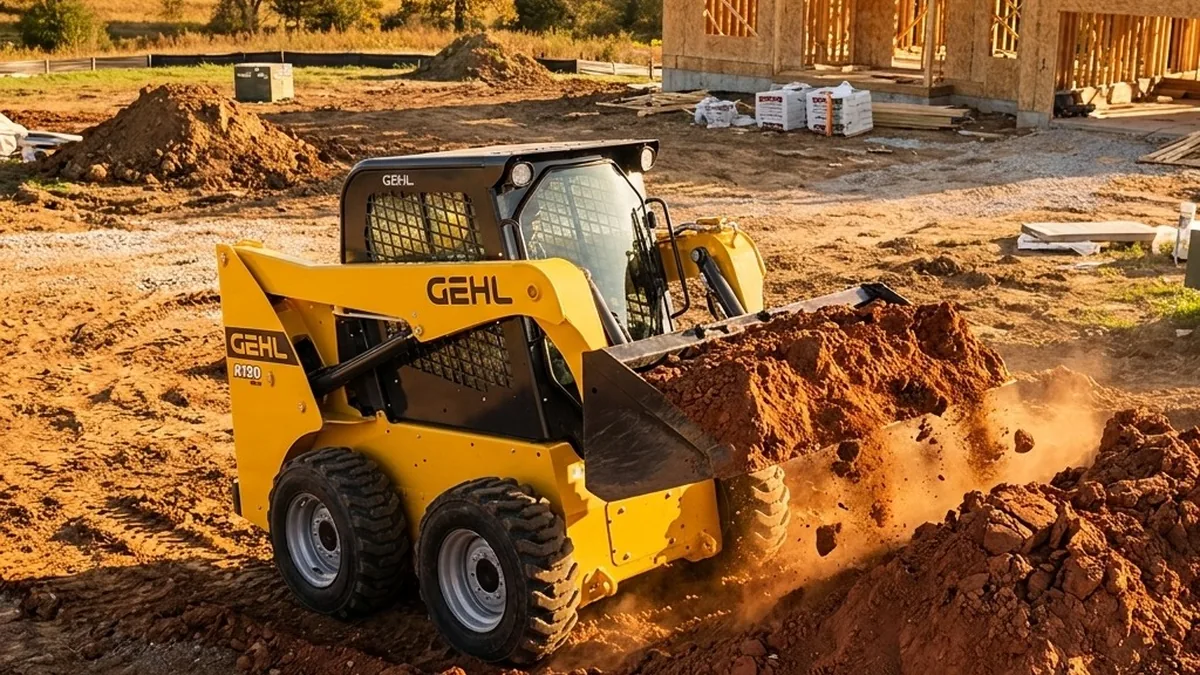
If you run a skid loader or a compact track loader for a living, the hydraulic system is the part you should worry about most. Good skid steer hydraulic maintenance comes down to a few simple habits: change the fluid and filters on a schedule, keep dirt and water out, and don't let the system run hot. Do those three things and the machine just keeps working. Skip them and you're looking at the most expensive failures a loader can hand you. This guide walks through why hydraulics matter so much, what to watch for, and what neglect actually costs you. We're a Manitou and Gehl dealer in Laddonia, MO, and we'd rather help you protect a machine than sell you a replacement before its time.
Why hydraulics are the heart of a loader
Everything useful a loader does runs through the hydraulic system. The lift arms, the tilt, the auxiliary circuit that powers a grapple or an auger or a brush cutter, the drive on most skid steers, even the steering on the track machines. The engine makes power, but hydraulics are what turn that power into work.
That means the fluid in your loader isn't just lubricant. It's the medium that transmits force, carries away heat, and keeps dozens of tight-tolerance parts from grinding on each other. Pumps, valves, cylinders, and motors are all built to fine tolerances and they all depend on clean fluid at the right level moving through clean filters. When the fluid breaks down or gets contaminated, every one of those components starts to wear faster. Nothing on the machine works hard alone. It all leans on the hydraulics.
This is also why hydraulic neglect is so quiet. A worn pump doesn't usually announce itself with a bang. It loses a little efficiency, then a little more, until one day the loader feels sluggish lifting a load it used to throw around. By then the damage is done and it's spread to other parts of the circuit. The whole point of a maintenance schedule is to catch problems while they're still cheap.
Skid steer hydraulic maintenance starts with fluid and filters on a schedule
The single most important habit in skid steer hydraulic maintenance is changing hydraulic fluid and filters on the interval your machine's manual calls for. Not when the fluid looks dark. Not when something starts acting up. On the schedule.
Hydraulic fluid wears out even when it looks fine. Heat and pressure break down the additives that protect against rust, foam, and oxidation. The fluid can still look clean and already be past its useful life. Filters fill up with the tiny particles that fluid picks up as the machine runs, and a clogged filter either starves the system or, on many setups, opens a bypass that lets unfiltered fluid straight through. Either way, the protection you paid for is gone.
A few rules of thumb that hold up across loaders:
- Follow the hour-based intervals in your operator's manual. Manitou and Gehl machines each spell out fluid, hydraulic filter, and case-drain filter intervals. Those numbers are your baseline, not a suggestion.
- Shorten the interval for hard duty. If you're running a high-flow attachment, working in heat, or putting the machine through long days, the fluid takes more abuse. Severe-duty service comes sooner than the standard schedule.
- Change every filter the schedule names, not just the obvious one. Loaders often have more than one hydraulic filter. Missing the case-drain or charge filter is a common and expensive oversight.
- Check the fluid level and condition between changes. A quick look every day catches a slow leak or contamination before it turns into a failure.
The cost of staying on schedule is fluid, filters, and a little time. The cost of falling behind is a pump or a drive motor. That math almost never favors stretching the interval.
Use the fluid the machine was built for
Hydraulic fluid is not all the same. Loaders are designed around a fluid with a specific viscosity and additive package, and the manufacturer calls out exactly what to use. Topping off with the wrong fluid, or mixing types, can thin out the protection and cause foaming or premature wear. When you buy fluid, match the spec in the manual. When in doubt, ask. It's a cheap question that prevents an expensive mistake.
Contamination is the number one killer
If you remember one thing from this article, make it this: dirt is the enemy. The large majority of hydraulic failures trace back to contamination, and most of it gets introduced by people, not the machine. Hydraulic components fail because of particles smaller than you can see, working like sandpaper on precision surfaces every time the pump turns.
Contamination sneaks in at predictable spots:
- Coupler faces on the auxiliary circuit. Every time you swap an attachment, the quick-connect couplers are exposed. Mid-Missouri dirt, mud, and crop dust love those open faces. Wipe them clean before you connect, every single time.
- Fluid changes and top-offs. A funnel, a rag, or a fill cap that touched the ground can dump dirt straight into the reservoir. Clean the area around the fill before you open it.
- Worn or torn hoses and seals. A weeping fitting that lets fluid out is also a path for air and grit to get in. Fix small leaks before they become contamination problems.
- Water. Water is contamination too. It gets in through pressure washing aimed at caps and breathers, or from condensation in a reservoir that sits through humid Missouri summers. Water in hydraulic fluid wrecks the additive package and rusts internal parts.
Most of this prevention is free. Wipe the couplers. Keep the fill area clean. Don't blast the breather with a pressure washer. Catch leaks early. Those small habits do more for hydraulic life than any product you can buy, and they cost you nothing but attention.
Heat is the slow killer
Contamination kills fast. Heat kills slow, and it's just as final. Hydraulic fluid has a temperature range it likes, and running consistently above it ages the fluid faster, breaks down the additives, and softens seals over time. Run hot long enough and you've quietly cut the life of the whole system.
Heat problems usually come from things you can see and fix:
- A plugged hydraulic cooler. Dust, chaff, and seed fuzz pack into the cooler fins, especially during mulching, mowing, and grain-country work. A blocked cooler can't shed heat. Blow it out regularly.
- Low or degraded fluid. Less fluid means less capacity to carry heat away, and old fluid carries it worse. Both push temperatures up.
- Working the machine past its comfort zone. Running a high-flow attachment that asks more of the circuit than it's set up for, or holding a function against a stop, builds heat fast. Match the attachment to the machine and watch how you run it.
- Summer heat. A mid-Missouri July adds load before you even start the engine. Clean coolers and fresh fluid matter even more in the hot months.
If a loader starts running hotter than it used to, treat it as a warning, not a quirk. Heat is usually the first sign that something in the system needs attention, and catching it early is the difference between cleaning a cooler and rebuilding a pump.
What neglect actually costs you
It's easy to push a fluid change when the machine still runs. Here's what you're risking when you do.
The cheap end is downtime. A hydraulic failure doesn't wait for a slow week. It happens mid-job, with a customer waiting, and the loader sits until parts and labor come together. For a working machine, a day parked is lost money on top of the repair.
The expensive end is the components themselves. Hydraulic pumps, drive motors, and control valves are among the priciest parts on a loader. When contaminated or overheated fluid takes one out, the debris often spreads through the circuit and damages more than the part that failed. A neglected system can turn a routine fluid change you skipped into a repair that costs many times over.
There's a resale cost too. A loader with clean records and a healthy hydraulic system holds its value. One with a history of overheating, slow lift, or a patched-together repair sells for less, if it sells. When you eventually trade up or sell, the maintenance you did, or didn't do, shows up in the price. If you're weighing how long to keep a machine versus replace it, our breakdown on renting versus buying a loader or telehandler walks through the ownership math.
A simple owner's rhythm
You don't need to be a hydraulics expert to keep a loader healthy. You need a routine. Here's a practical one that fits a working operation.
Every day, before you start
- Walk the machine and look for fresh fluid on the ground or wet spots on hoses and fittings.
- Check the hydraulic fluid level.
- Glance at the cooler and knock off any obvious buildup.
- Wipe the auxiliary couplers before connecting an attachment.
Every week, or thereabouts
- Clean the hydraulic cooler properly, more often in dusty or crop-heavy work.
- Look over hoses for chafing, cracks, or bulges.
- Note whether the loader feels as strong as it should on lift and tilt. Sluggishness is a clue.
On the manual's hour intervals
- Change the hydraulic fluid with the spec'd type.
- Replace every hydraulic filter the schedule names.
- Inspect the system for slow leaks and address them.
Track loaders carry the same hydraulic habits plus an undercarriage that's its own maintenance world. If you run a compact track loader, pair this with our guide to track loader undercarriage maintenance so the whole machine stays ahead of trouble. The hydraulics and the tracks are the two systems that decide how long a track loader lasts.
Buying with the hydraulic system in mind
If you're shopping for a loader rather than maintaining one, the hydraulic system deserves a hard look up front. The cleanest path to a long-lived machine is buying one matched to the work you actually do, then maintaining it the way this guide describes.
A few things to weigh:
- Match auxiliary flow to your attachments. If you plan to run high-demand attachments, the loader's hydraulic capability matters more than almost anything else. The wrong pairing runs hot and wears out parts. We dig into machine fit in our comparison of a skid loader versus a track loader.
- Think about how you'll keep it clean. A machine that's easy to service and easy to keep dirt out of is a machine you'll actually maintain. Easy access to the cooler, fill, and filters pays off for years.
- Buy local for the support. A loader is a long relationship. Buying from a dealer close to home means the people who know the machine are nearby when you have a question. We're the only Manitou and Gehl dirt-equipment dealer for about 50 miles, serving Columbia, Jefferson City, Mexico, Fulton, and the Vandalia and Bowling Green stretch that's gone underserved for years.
When the equipment fits the job and the hydraulics aren't constantly fighting to keep up, maintenance gets easier and the machine lasts longer. That's the whole game.
Protect the machine you've got, or pick the right next one
Hydraulic health isn't complicated. Stay on the fluid and filter schedule, keep dirt and water out, don't let it run hot, and fix small leaks before they grow. Those habits cost almost nothing and they protect the most expensive systems on your loader. The owners who treat hydraulics as a routine, not an afterthought, get years of dependable work out of a machine. The ones who wait for a problem usually pay for it.
If you're looking at a new machine and want it set up to last, take a look at our skid loaders and compact track loaders, or let our Find Your Machine selector point you toward the right fit for your work. We'll help you match the loader to the job and the attachments to the loader, so the hydraulics never have to work harder than they should. No pressure and no pitch, just straight answers from a mid-Missouri dealer who'd rather see your machine run right.