
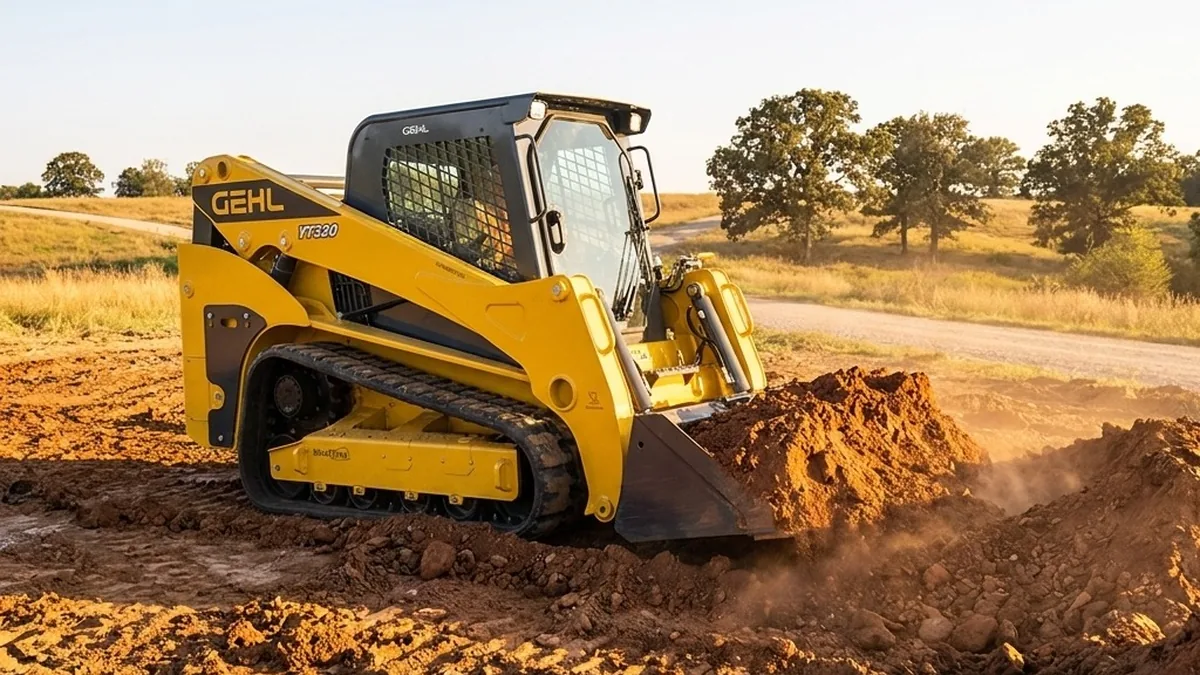
A mid-Missouri summer is hard on a working loader. Skid steer overheating prevention comes down to one simple idea: keep air and coolant moving the way the machine was designed to move them. When a radiator packs with chaff, a cooler clogs with dust, coolant runs low, or a filter plugs, the engine and hydraulics can't shed heat. The machine warns you, throttles back, and then shuts down to protect itself. That's not a breakdown so much as a machine doing its job. The good news is that almost all of it is preventable with a few minutes of habit every day. This guide walks through why compact equipment overheats around Columbia, Jefferson City, Mexico, and Fulton, what the warning signs look like, and the small routines that keep your day from ending early.
Why a hot mid-Missouri day pushes a loader to the edge
Heat is a fact of the work, not a flaw in the equipment. A skid loader or compact track loader runs its engine hard and its hydraulics harder. Both systems make heat, and both rely on air pulled through coolers to carry that heat away. On a hot afternoon in central Missouri, the air doing the cooling is already warm before it ever reaches the radiator. That shrinks the machine's margin. Add humidity, dust, and a packed work schedule, and a machine that runs fine in spring can start flirting with the high end of its temperature range by July.
The jobs we do here make it worse in predictable ways. Grading and dirt work kick up fine dust that drifts straight into the cooling package. Brush and grass work throw chaff and seed fluff that lodges in the fins. Tearing into mid-Missouri clay loads the hydraulics, and loaded hydraulics run hot. None of that is unusual. It just means the cooling system has more to fight, so the small maintenance habits matter more in summer than any other season.
What actually causes the heat to build in skid steer overheating
Overheating almost always traces back to one of a handful of causes. Knowing them turns a mystery shutdown into a five-minute check.
- A packed radiator or oil cooler. This is the number one cause on a job site. The cooling fins act like a fine screen. Dust, chaff, seed fluff, and grass clippings build a mat across the face, and once airflow drops, temperature climbs. You often can't see it from the operator seat because the buildup hides behind a screen or sits on the back side of the core.
- Low coolant. Coolant carries engine heat to the radiator. If the level drops from a slow leak, evaporation, or a tired cap, there's less fluid doing the work and temperatures rise faster. A surprising number of summer shutdowns are just a low overflow tank nobody checked.
- A plugged air filter. A clogged engine air filter makes the engine work harder and run hotter, and a dirty cab filter lets dust into spaces where it shouldn't be. Dusty mid-Missouri summers plug filters faster than you'd expect.
- Chaff and debris in the engine bay. Beyond the cooler face, debris collects on belts, around the fan, and on hot surfaces. It blocks airflow and, in dry conditions, it's a fire risk. A loader doing brush work can pack an engine compartment in a single afternoon.
- Hydraulic heat from heavy work. The hydraulic oil cooler shares the same incoming air as the radiator. When you're running a high-flow attachment or pushing into hard clay all day, the hydraulics dump a lot of heat into that shared cooling package. If anything upstream is restricted, the hydraulics feel it first.
- A worn belt or weak fan. If the belt that drives the cooling fan or water pump is glazed or loose, the fan moves less air. It's an easy thing to overlook and an easy thing to catch on a quick walk-around.
Notice the theme. Most of these are about airflow and fluid level, and most of them you can spot or prevent without any special tools.
The warning signs to watch for
A machine rarely overheats without telling you first. Train your operators to notice the early signals, because the cheap fix happens before the gauge pegs, not after.
What you'll feel and see from the seat
- The temperature gauge creeping up and staying higher than it ran yesterday on the same job. A slow climb is the most honest warning you'll get.
- Power that fades under load. Many machines pull engine power back to protect themselves as they heat up. If the loader feels sluggish digging into a pile it handled easily this morning, heat is a prime suspect.
- A dash warning light or a beep. Don't drive through it. The machine is asking you to stop and look.
- Hydraulics feeling slow or weak. Hot hydraulic oil thins out and the work slows down. That's a signal the shared cooling package is struggling.
What you'll notice on a walk-around
- A visible mat of chaff, dust, or grass across the cooler or rear screen.
- A sweet smell or wet streaks that suggest a coolant leak.
- A low overflow bottle when the machine is cold.
- Debris piled around the belt, fan, or muffler.
The cost of ignoring these is real. A shutdown in the middle of a job burns your crew's time and your schedule. Run a machine hot often enough and you risk damage to the engine and hydraulic system that's far more expensive than the minute it takes to blow out a radiator. That's the whole argument for the daily habit: a few minutes up front protects the machine you paid for.
The daily blow-out, and how to do it right
If you take one habit away from this article, make it the daily blow-out. Clearing the cooling package with compressed air is the single most effective thing you can do to prevent summer shutdowns, and it takes only a few minutes.
- Do it when the machine is cool, ideally before you start in the morning or at the end of the day. Working around a hot engine and hot surfaces is asking for a burn.
- Open the rear access per your operator's manual and find the cooler face. Many compact machines have a swing-out or tilt-up cooler so you can reach both sides. Use it.
- Blow air from the clean side toward the dirty side, which pushes the debris back out the way it came in rather than driving it deeper into the fins. Hold the nozzle a sensible distance back so you don't bend the fins.
- Clear the whole bay, not just the core. Knock chaff off the belts, the fan shroud, and any flat surface where it collects. In dry summer brush, that debris is both an airflow problem and a fire risk.
- Increase the frequency when the work is dirty. Grading in dust or mowing heavy grass can pack a cooler in hours, not days. On those jobs, a midday blow-out is cheap insurance.
No air compressor on site? A soft brush and a careful eye still help, but compressed air does the real work and is worth having in the truck on a summer job. The point is consistency. A cooler that gets cleared every morning never gets the chance to pack solid and trip a shutdown at the worst possible time.
A short summer routine that prevents most shutdowns
You don't need a clipboard and an hour. You need a handful of checks done in the same order every day so nothing gets skipped. Here's a practical mid-Missouri summer routine.
Before the day starts
- Check the coolant level in the overflow tank while the machine is cold. Top it off with the correct coolant if it's low, and note it, because a tank that's always dropping points to a leak worth chasing.
- Glance at the cooler face and rear screen. Blow it out if you see buildup, and just do it anyway on a dirty job.
- Eyeball the engine air filter indicator if your machine has one. Tap out or service the filter per the manual when it tells you to.
- Walk the engine bay for packed debris around the belt, fan, and exhaust.
During the day
- Keep an eye on the temperature gauge and trust it. A creeping needle is your cue to stop and clear the cooler.
- If you smell something hot or sweet, or the machine loses pull, park it and look before pushing on.
- On the dirtiest jobs, blow the cooler at lunch. Five minutes beats a tow.
Weekly
- Look the belts over for cracks, glazing, or looseness.
- Check the hydraulic oil level and watch for any heat-related slowdown that's becoming a pattern.
- Give the cab air filter attention. Dusty summers plug it and that affects both your comfort and the machine.
Match the rhythm to the work, not the calendar. A loader running clean material a couple hours a day needs less than one mulching brush in August dust. The operator who runs the machine usually knows which it is.
Track loaders, telehandlers, and the rest in the heat
Everything above applies across the compact lineup, with a few wrinkles by machine class. A compact track loader runs close to the ground and works in the kind of dusty, debris-heavy conditions that load up a cooling package fast, so the daily blow-out matters even more. Tracks also trap mud and debris in the undercarriage that adds drag and heat to the whole system, which is its own maintenance topic worth understanding. If you run tracks, our guide to track loader undercarriage maintenance is a useful companion to this one, and the broader skid loader vs track loader comparison covers how the two handle different mid-Missouri conditions.
Telehandlers and forklifts share the same fundamentals. Keep the cooler clear, the coolant up, and the filters fresh, and watch the gauge under heavy lifting in the heat. Aerial work platforms, especially electric ones, have their own cooling and battery-heat considerations, so always follow the operator's manual for your specific machine. The constant across every class is simple: clean air in, heat carried out, fluids topped off.
Buying with summer in mind
Heat management is partly maintenance and partly buying the right machine for how hard you actually work it. If you're sizing up a loader for full summer days in central Missouri dirt, that's worth thinking through before you sign. A machine that's matched to the load runs cooler and lasts longer than one that's always pushed to its limit.
That's a conversation we have with buyers all the time as the authorized Manitou and Gehl dealer for this part of the state. We're in Laddonia, and for roughly fifty miles around, including the underserved stretch through Mexico, Vandalia, and Bowling Green, we're the closest dealer for Manitou and Gehl dirt equipment. So when you ask which machine fits your jobs and your summers, you're getting an answer from people who work in the same heat you do. If you're still deciding between owning and short-term needs, our breakdown of rent vs buy for a loader or telehandler lays out the trade-offs without the sales spin.
On the money side, the current Manitou and Gehl program runs 0% for 48 months on skid and track loaders, with rates from 1.99% across the line and 1.49% on electric machines, through September 30, 2026. If you want to see what fits, the financing page has the details, and we're happy to talk it through.
Keep it cool, keep it working
Summer doesn't have to mean downtime. Skid steer overheating prevention is mostly about a few honest minutes each morning: clear the cooler, check the coolant, watch the filters, and trust the gauge when it starts to climb. Do that, match the routine to how dirty the job is, and your loader will keep pulling through the hottest mid-Missouri afternoons. If you're shopping for a machine that's sized right for the work you do all summer, take a look at the skid loaders and compact track loaders we carry, or let our Find Your Machine selector point you toward the right fit. We're right here in Laddonia when you're ready to talk it over.