
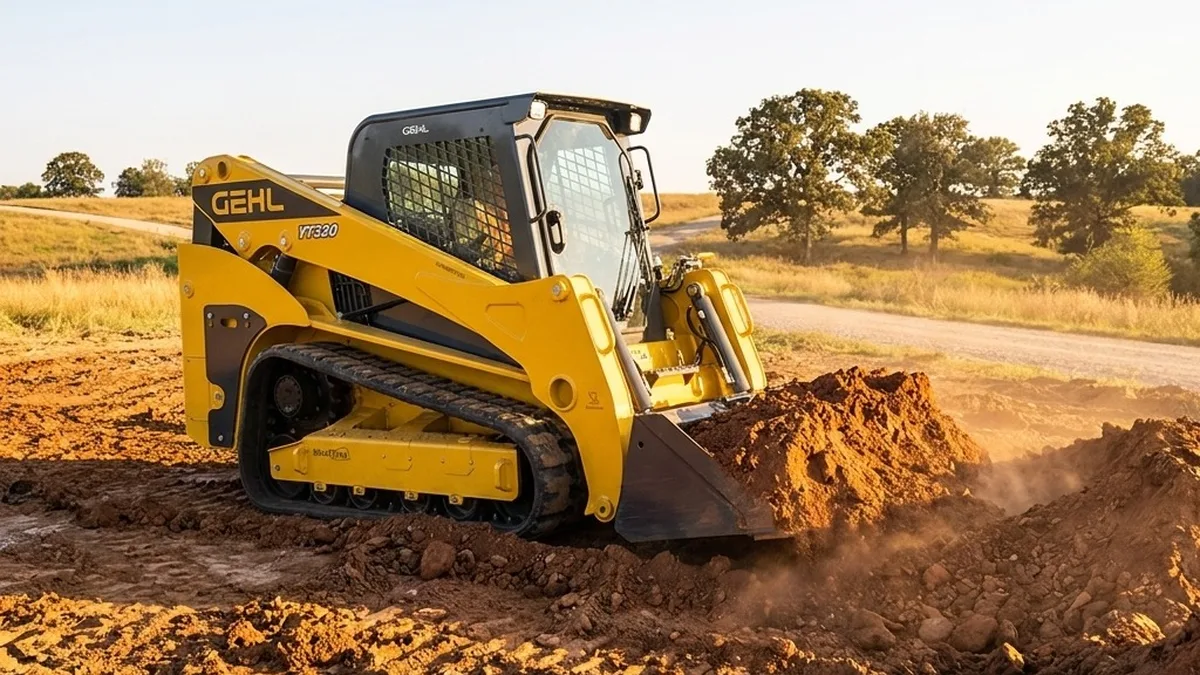
A skid steer that pulls to one side or won't drive straight is more than an annoyance. It wears you out fighting the controls, it chews up one set of tires or tracks faster than the other, and it usually means one side of the drive is doing more work than the other. The good news is that a lot of drift traces back to something simple: mismatched tire pressure, uneven track tension, or cold oil that hasn't warmed up. This guide walks the causes in the order a dealer would check them, from the free fixes to the ones that mean a real drivetrain diagnosis. We sell Gehl and Manitou compact equipment here in Laddonia, and we'd rather help you figure out why it's pulling than have you white-knuckle it through another job.
First, separate two different complaints. A machine that won't move at all is a different problem, usually a hydraulic lockout, and our skid steer won't start or move checklist covers that. This one is about a machine that drives, but drives crooked.
Start With the Free Checks
Before anyone touches a drive motor, rule out the cheap stuff. On a wheeled machine especially, most drift starts here.
- Tire pressure, side to side. On a wheeled skid steer, uneven tire pressure changes the rolling diameter and pulls the machine toward the low side. Air all four to spec and see if it tracks straight. This is the single most common cause of a wheeled machine wandering, and it's free to check.
- Tire wear and matching. Tires worn to different diameters, or a mismatched tire someone threw on one corner, do the same thing pressure does. A machine wants four tires that match. A single bald or oversized tire will steer it for you.
- Track tension on a compact track loader. If one track is looser than the other, the machine pulls. Check and set tension to spec on both sides, and look for a track that's packed with mud or debris on one side, which changes how it drives.
- Let the oil warm up. Cold hydraulic oil can make the drive feel uneven until it comes up to temperature. If it drifts cold and straightens out warm, that's the oil, not the machine.
If the tires match and are aired right, the tracks are even, and it's warm and still pulling, the cause is in the drive itself.
Figuring Out Which Side Is the Problem
Before you go looking for a bad drive motor, pin down which side is actually lagging. A few minutes of testing saves a lot of wrong guessing.
- Drive it straight on flat, open ground. Point both controls dead ahead on a level surface and see which way it wanders. A machine pulls toward the weaker side, because the strong side out-drives it and steers you that direction.
- Check forward and reverse. If it pulls one way forward and the other way in reverse, that behaves differently than a machine that pulls the same direction both ways, and it helps separate a drive problem from a dragging or binding one.
- Compare the two sides off the ground. With the machine safely up on blocks and following your manual's safety steps, you can watch whether both sides spin with the same speed and effort. An obvious difference points you at that side's drive.
- Note whether it's sudden or gradual. A pull that crept in over months usually means wear, a chain or a tire. A pull that showed up overnight is more likely something that broke or came loose.
If One Side Is Clearly Weaker
When one side lags no matter what, the machine is telling you that drive circuit isn't keeping up with the other one.
- Drive chain tension. Most wheeled skid steers run chains from the drive motor to the wheels inside each side. A stretched or loose chain on one side lets that side lag, and a chain that's about to fail will do it worse over time. Chain tension is a known service point on these machines and a common cause of a pull that's gotten worse gradually.
- A weak or worn drive motor. If one side has lost muscle, a worn hydraulic drive motor on that side can be the reason. This is a real diagnosis with a pressure gauge, not a guess, but a machine that has always pulled a little and now pulls a lot is pointing you at one side's drive.
- Uneven hydrostatic pressure. The drive is hydrostatic, and each side has its own circuit. A relief valve or pump issue on one side caps that side's power and the machine crabs toward it. Confirming that takes gauges and the machine's spec.
- Something dragging. A binding bearing, a dragging brake, or debris wrapped around an axle on one side adds resistance that reads exactly like a weak drive. Worth a look underneath before you condemn a motor.
If the Controls Feel Off or Out of Calibration
Sometimes the drive is fine and the problem is how the controls are telling it to move.
- Controls not centering. If the joysticks or drive levers don't return cleanly to neutral, the machine creeps or pulls even when you think you're going straight. Watch whether the controls actually center.
- Drive calibration. Some machines let you calibrate or adjust the drive so both sides track evenly. If yours drifts and everything mechanical checks out, a calibration per the operator's manual may be all it needs. Others need the software to set it, which is a dealer-level job.
- Linkage wear. On machines with mechanical control linkage, worn joints and bushings let one side command more than the other. It shows up as a machine that never quite goes where you point it.
Tracks and Wheels Wear Differently
Whether you're on a wheeled skid steer or a compact track loader changes what causes the pull and what it costs you to ignore it.
- Wheeled machines pull mostly from tire mismatch and drive-chain wear. The fix is often as cheap as air and a chain adjustment, but a machine left to pull will scrub one set of tires bald ahead of the other, so it pays to catch it early.
- Compact track loaders pull from uneven track tension and, on a higher-hour machine, from wear in one final drive. If yours are already past saving, work out whether worn-out tracks are worth fixing before you spend. A track loader that pulls also tends to wear its undercarriage unevenly, and undercarriage is the single most expensive wear item on these machines. Our guide on track loader undercarriage maintenance covers keeping both sides even.
- Either way, uneven is expensive. A drivetrain that's out of balance wears the loaded side faster, so a pull you ignore today turns into a bigger repair bill down the road. That's the real argument for chasing it down while it's still cheap.
When It's Not Worth Chasing Anymore
Tire pressure and track tension fix a lot of pulling for free. But a worn drive motor, a failing pump, or tired chains and linkage on a high-hour machine add up, and a drivetrain that's wearing unevenly rarely gets better on its own. When the repairs start stacking and you're losing time to a machine that fights you all day, the honest math sometimes favors moving on to something that drives straight and true.
That's a call we're happy to help you make straight, no pressure. We're your local Gehl and Manitou dealer in Laddonia, and we'd rather give you an honest read than push a sale. If it's time, look at the current skid loaders and compact track loaders, or the full Manitou and Gehl lineup. Not sure what size and drive setup fits your work? The Find Your Machine tool sorts it out in a couple of minutes, and equipment financing can make a dependable machine easier to plan around than a drivetrain rebuild. And if the hydraulics feel weak on top of the drift, our guide on weak or not-working hydraulics covers that side of it.
Most of the time, though, the fix is air pressure, track tension, or a chain adjustment. Check the free stuff first, warm it up, and see how it tracks before you go looking for anything expensive.